since 1976

since 1976
By Lee Pang Seng
OPEN-TOP motoring is understandably popular in countries with cooler weather, especially for motorists who wouldn’t mind getting tanned by the overhead sun while enjoying that wind-in-the-air thrill. In high humidity conditions such as Malaysia’s, that pleasure would be best enjoyed in similarly cool conditions up in the highlands like Genting, Fraser’s or Cameron Highlands.
Our first experience at open top motoring was being a passenger in a colleague’s MG Sprite soft-top in the late 1970s and early 1980s. No, this Sprite didn’t have that electric assistance in opening or closing the soft top. We had to put it down and up ourselves, and we recalled the anxiety of having to put it up quickly by the roadside as we were running into impending rain.
This was because the MG Sprite was designed to be a low-cost model against the pricier cabriolets from the more exclusive brands. And well, the soft-top didn’t quite keep the rain completely out but we ‘survived’ that, just a little damp for the experience.
Generally, building cabriolets and convertibles is a serious business for the established brands as such cars cater to the well-heeled who could splash out on them to drive at their whim and fancy. Our last Cabrio drive experience was in the Ferrari Roma Spider in Penang two years ago, taking to the winding stretches of Balik Pulau with the top down as it was a cloudy day.
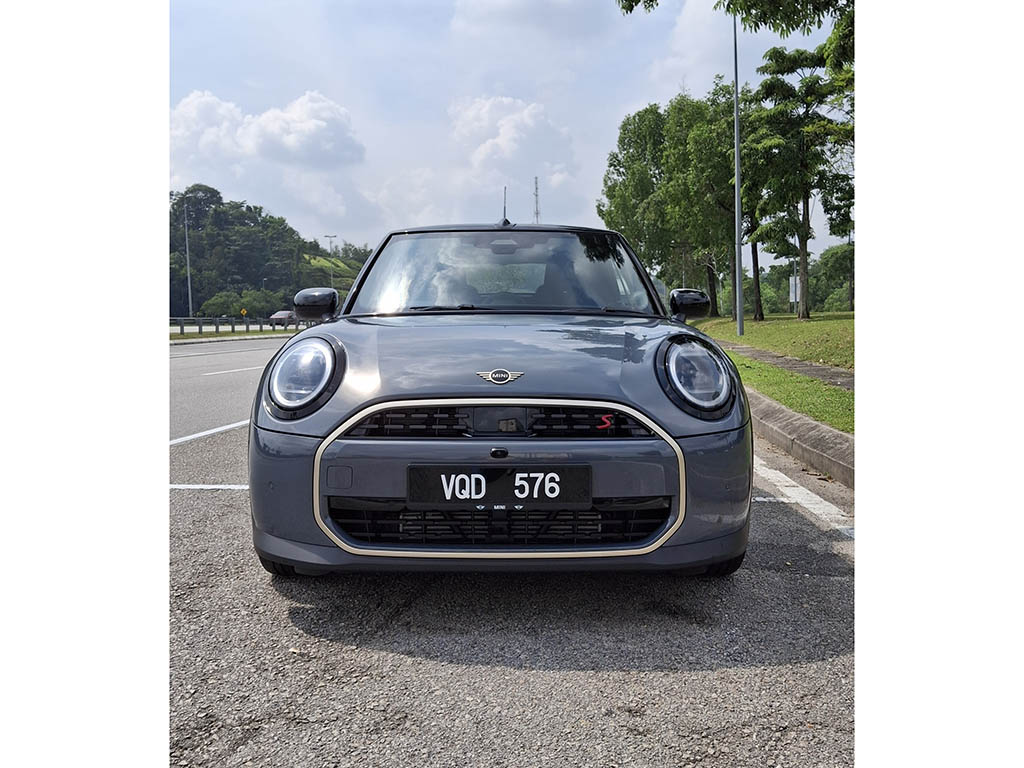
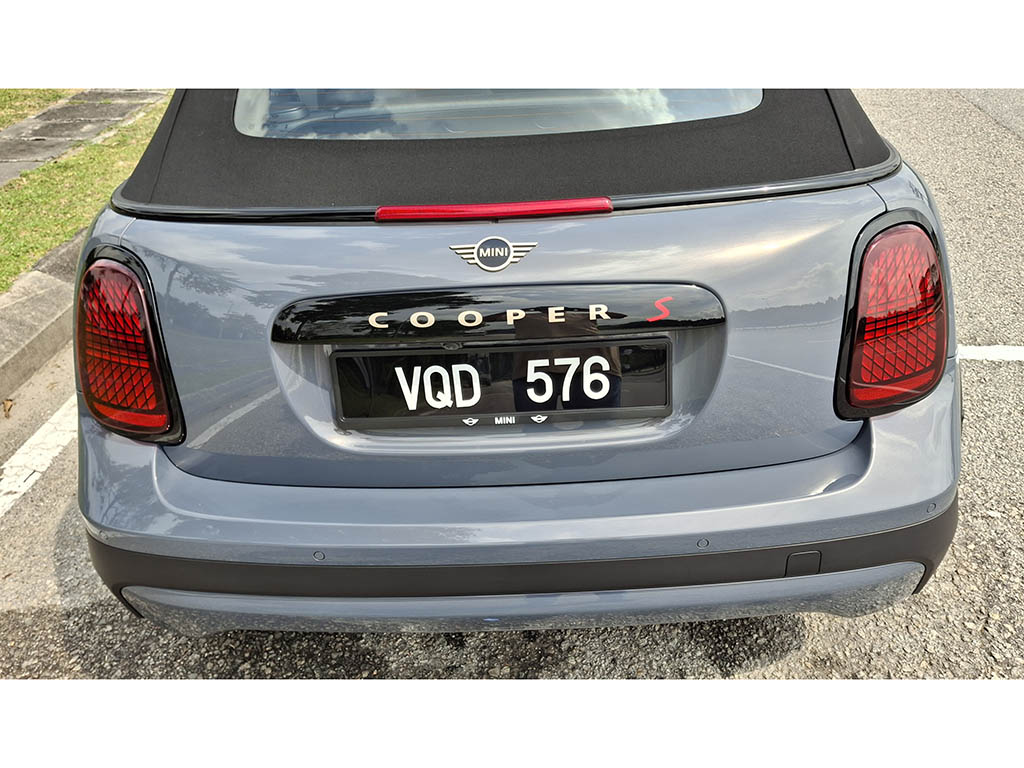
This time around, we had a longer experience with another Cabrio in the two-door Mini Cooper Convertible S, covering much less exciting roads. We had three days with it (including tsking delivery on the first day and returning it on the third day) but we didn’t have quite the time to include a drive to Genting Highlands just to enjoy that cool air with the top down.
The weather was way too hot for open-top motoring and our brief top-down drive was for a spot of photo-taking. However, there are some who wouldn’t mind doing that as we came across a chap doing just that in an MG Cyberster Cabriolet earlier in the year. He wore a baseball cap but we figured he had the air-cond on (just as we did during the photoshoot).
Putting the top electrically down or up is said to take about 10 seconds, faster than we could remember for some cabrios we drove over the years. A rough count appeared to support that, despite the slight pause midway for it to align its trajectory. This is done using a control on the top windscreen panel in much the same way you would do opening or closing the sunroof.
Driving the Mini again after some 12 years brought back some good memories; not from the five-door model we drove in Oxford, UK in 2014 or the three-door Cooper S we had three days with here that same year. Our reference was to the first car we owned in 1972, a hand-me down from our grandfather; the Mini 1000.
Back then, having a seven-old Mini 1000 was a thrill, especially for a budding 20-year-old looking for employment. We cared little about its compact dimensions or the unusual central location of the big round speedometer on the dashboard, which also served as some sort of a full-length tray for small items.
We loved its nippy ways as we zipped around town and how we could squeeze into any area or parking space. Its fuel sipping engine also endeared it to us as we could cover good distances without having to pay too much for petrol (it was about a Malaysian dollar to a gallon or 4.5 litres back then). Interior space was a premium but we still squeezed in six people a few times. Crazy but the things young people would do!
When we picked up the Mini Cooper Convertible S, we couldn’t help but feel the nostalgia of the compactness that we first experienced almost 55 years ago. That was probably heightened by the fact that we are currently the owner of a C-segment SUV (sport utility vehicle) that is a lot more spacious by comparison.
While we enjoyed the convenience of adjusting the driver’s seat, we were rather dismayed at having to do it manually. We figured if a car could fetch an on-the-road price of RM318,888 (without insurance), electric assistance was only to be expected. Mini probably wanted its customers to be more physically engaged in such things rather than pamper them.
Drawing the seatbelt buckle is another contortionist act as it is located quite far back due to its two-door body design. The doors are longer to allow entry into the rear seats, which are at best suitable for kids (not even teenagers and we do declare that our Mini 1000 was slightly roomier here). As such, the seatbelt buckle is located further astern.
Other familiar notes include the centrally located speedometer, although the item in the current Mini combines an infotainment display with touchscreen convenience. Its modern-day standing lies in the fact that it is a 240mm OLED (organic light emitting diode) display that is superior to LEDs with better picture quality, fast response times and thinner design with fewer components, among other advantages.
The modern touch here is that the HUD (head up display) comes as standard equipment so that the driver need not take his eyes off the road to keep track of relevant information. The info is projected onto a screen on top of the dashboard in high-definition graphics and was easily gleaned without being a distraction (as we came across in some other vehicles with similar HUD set-up).
The anthracite headliner for the dashboard cover is a little tacky and we found the thick-rim three-spoke sports steering to be somewhat out of place in the cosy snugness of the Mini interior. We found it rather amusing to handle a thick steering wheel within the Mini tight confines and would prefer something slimmer.
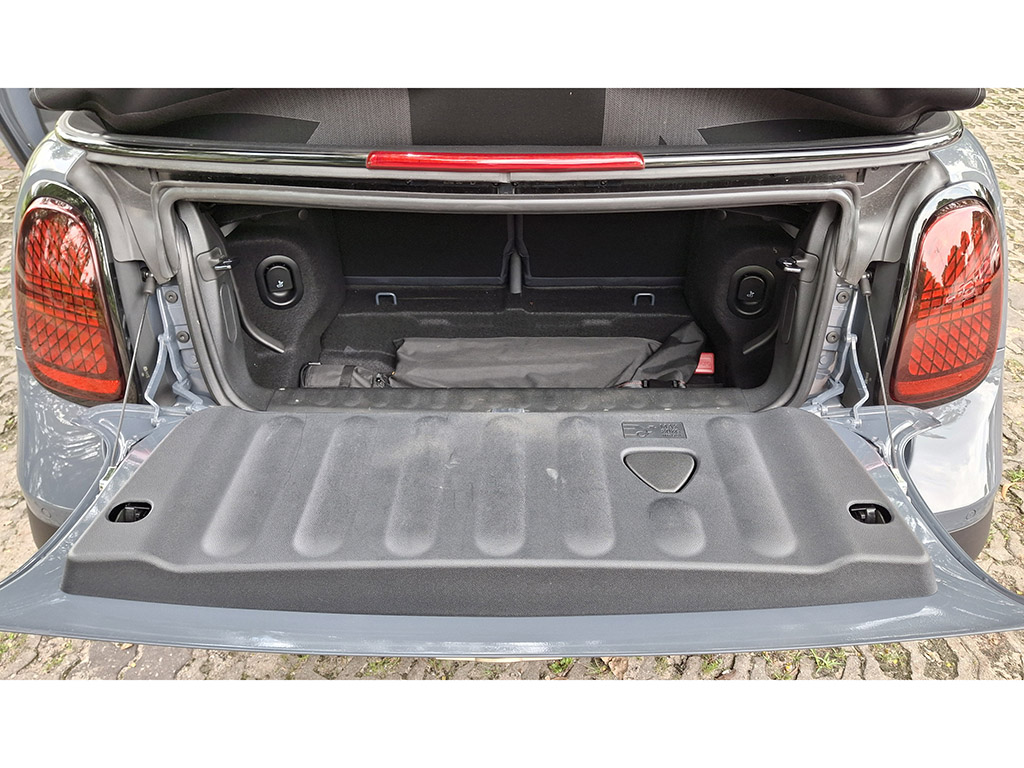
As to the luggage space, we are in two minds whether to call the down-folding door a third door for the Mini Convertible. Part of the body work runs across the top, serving as an anchor for the 60:40 folding rear seatrests. The luggage space is said to be 160 litres (just perfect for our grocery shopping with four bagfuls) and folding the seats would extend space to 215 litres, which is not much more.
Unusual touches are in starting the engine and selecting the drive modes; we were almost led to believe we were driving a Chinese made vehicle as many come with unusual drive selection approach. To start the engine, we need to turn the centre knob on the mini-panel below the OLED info display. To select the drive mode, we used the knob to the right of it with the parking button nearby.
For the ride mode, we selected what was available via the Experiences knob to the left of the start knob. We settled for Comfort as it was best over the wide array of road surfaces (mostly bumpy and uneven) we covered daily. The 18-inch alloys are fitted with Hankook Ventus S1 evo tyres, which were about right for the Mini Cooper Convertible S and less bumpy on impacts over the uneven road surfaces.
For power, the 2.0-litre (1998cc) turbocharged engine is much improved over the Cooper S we drove in 2014 with higher output of 150kW (204hp) from 5000 to 6500rpm and 300Nm torque that peaks early at 1450rpm and plateaus till 4500rpm. Mini says the Cooper Convertible S sprints from 0 to 100km/h in 6.9 seconds and has a top speed of 237km/h.
Power goes to the front wheels via a seven-speed Steptronic dual-clutch transmission. The average fuel consumption is 6.6-6.5 L/100km (WTLP – Worldwide Harmonised Light Vehicle Test Procedure) or 15.1-15.3km/l. As we only covered about 120 kilometres during the three days, the fuel level indicator moved just a little suggesting its fairly fuel frugal ways.
We enjoyed a few bursts here and there on some of the highways, and liked the way the Cooper Convertible S picked up the speed quickly when we put our foot down on the accelerator. Its urban manners are just as well liked with the respective drive experiences, limited by the bad roads we had to cover though!
We were equally thrilled to drive the Cooper Convertible S along some of our favourite winding stretches as we could explore a fair bit of its dynamic limits through some of the sharp turns. The MacPherson strut front suspension and multi-link rear with twin-tube gas-filled pressure dampers did the job well to boost our confidence.
We believe we would also enjoy a leisurely drive up to Genting or Fraser’s Hills, enjoying the cool air at the upper end. That’s how we would envisage the owner of such a car in enjoying the motoring pleasure of a convertible whenever he feels like it.